
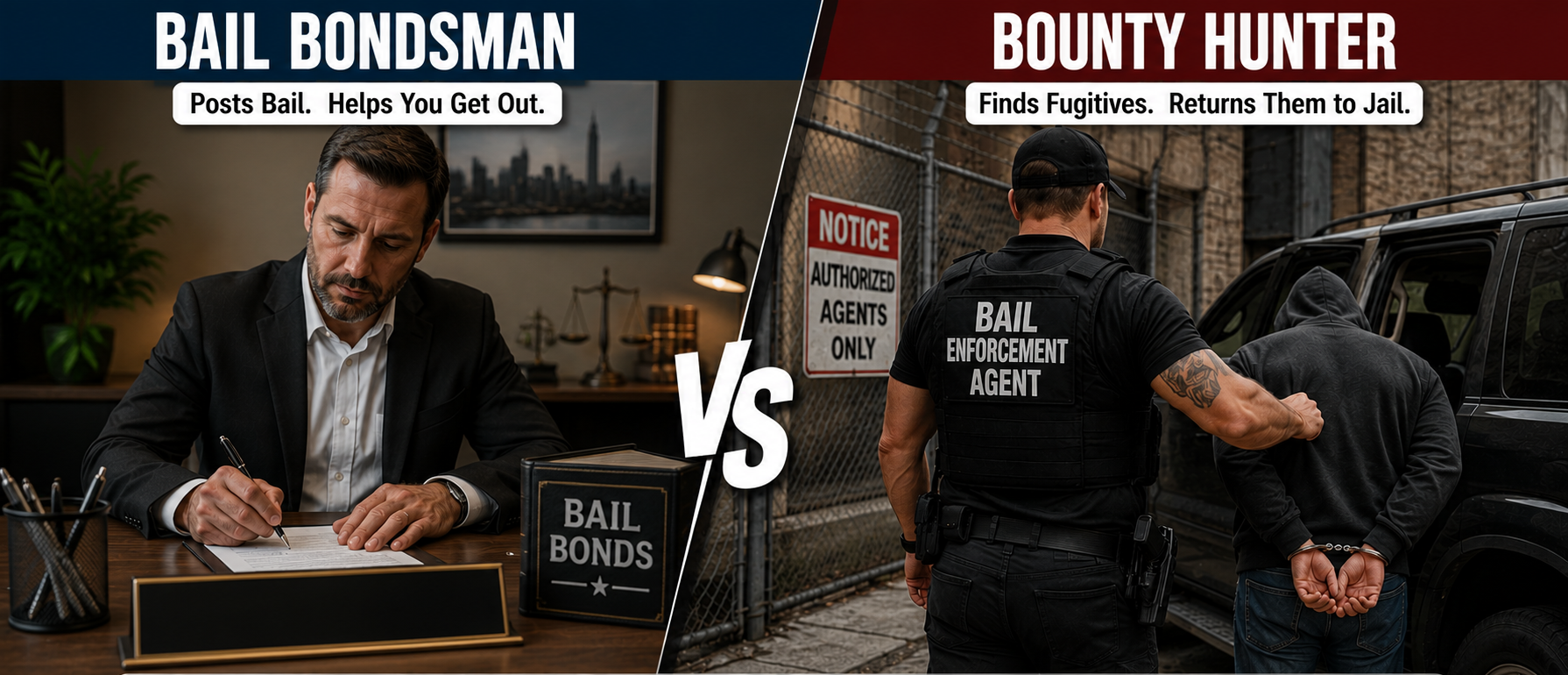
The terms bail bondsman and bounty hunter are often used interchangeably in popular culture, but in Texas they represent legally distinct roles with separate licensing requirements, authorities, and limitations. If you are involved in the bail bond process, understanding both is worth your time.
What Does a Bail Bondsman Do in Texas?
A bail bondsman, also called a bail bond agent or surety agent, is a licensed professional who posts bail on behalf of a defendant in exchange for a non-refundable premium, which is 10% of the bail amount under Texas law. The bondsman acts as a financial guarantor, promising the court that the defendant will appear at all required proceedings. If the defendant fails to appear, the bondsman is liable for the full bail amount.
Bail bondsmen in Texas are regulated by the Texas Department of Insurance and must carry proper licensing, maintain a certificate of authority, and operate within state statutes. Learn more about the bail bonds process to understand how this role functions from arrest to release.
What Is a Bounty Hunter and What Powers Do They Have in Texas?
A bounty hunter, legally referred to as a bail enforcement agent or fugitive recovery agent in Texas, is hired by a bail bondsman to locate and return defendants who have skipped bail. In Texas, this role is regulated under Chapter 1704 of the Texas Occupations Code.
Texas law requires bail enforcement agents to:
- Be licensed through the Texas Department of Insurance
- Notify local law enforcement before apprehending a fugitive in that jurisdiction
- Carry their license and written authorization from the bondsman during any recovery operation
- Not enter a private residence without the occupant’s consent or a court order, except in limited circumstances
Unlike in some other states, Texas bounty hunters cannot break and enter without permission. They have more authority than a private citizen but less authority than a law enforcement officer.
Can a Bail Bondsman Also Be a Bounty Hunter in Texas?
Yes, but they must hold both licenses. A bail bond agent who also performs fugitive recovery must be separately licensed as a bail enforcement agent. The two roles, while related, require independent compliance with state regulations.
Contact us 24/7 at (713) 224-3600 with questions about how the bond process works, or contact Godfather’s Bail Bonds online any time.
What Happens When a Defendant Is Caught by a Bounty Hunter?
Once a fugitive is apprehended, they are returned to the custody of the original jurisdiction, the bond is reinstated or exonerated depending on court action, and the defendant is brought before the court again. The original bail may be revoked, and new bail may be set at a higher amount or denied entirely based on the failure to appear.